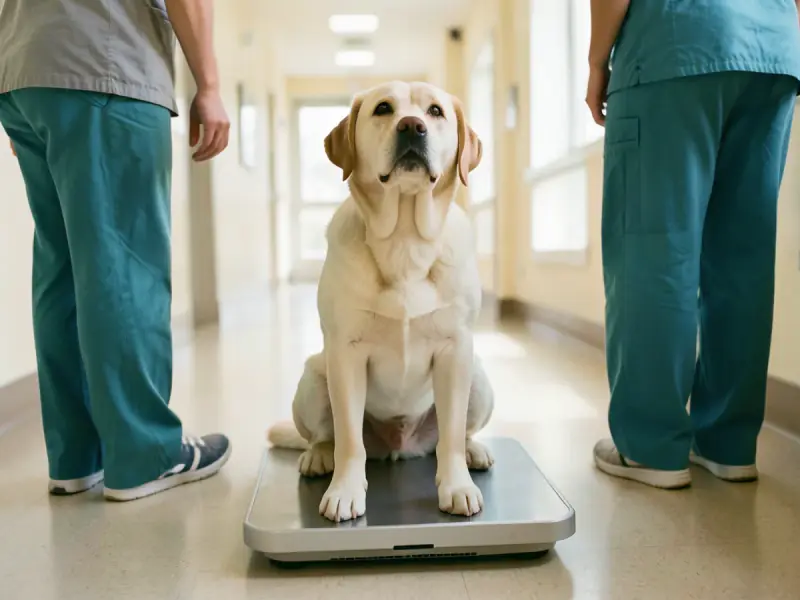
Where your pet is now
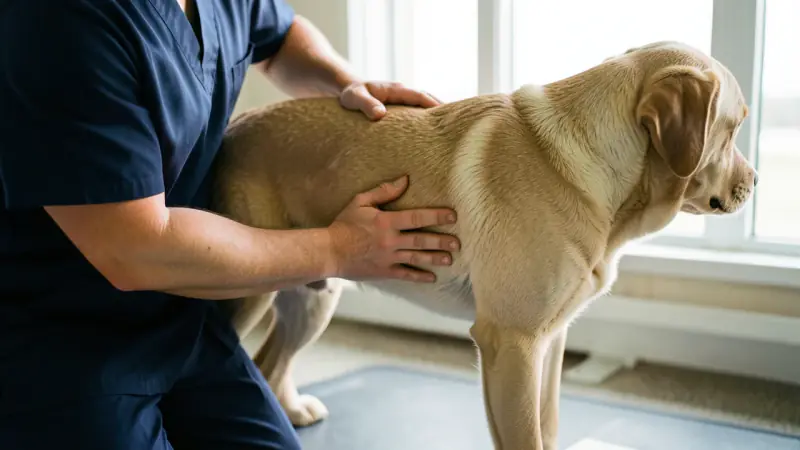
We weigh your pet and score body condition by sight and touch: can we feel the ribs, is there a waist. That tells us more than the number on the scale.
A feeding plan that fits your home
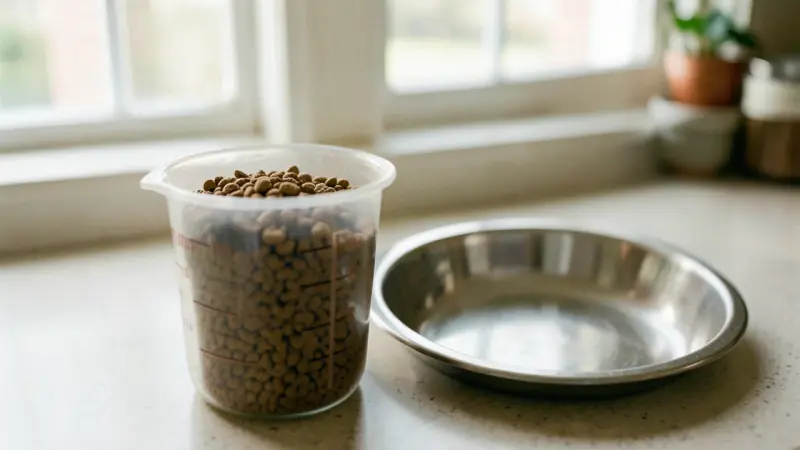
We work out a daily amount and measure it in cups, so everyone in the house feeds the same. Treats count too, so we leave room for them.
Change food slowly, over about a week, to avoid an upset stomach.
Weigh-ins along the way
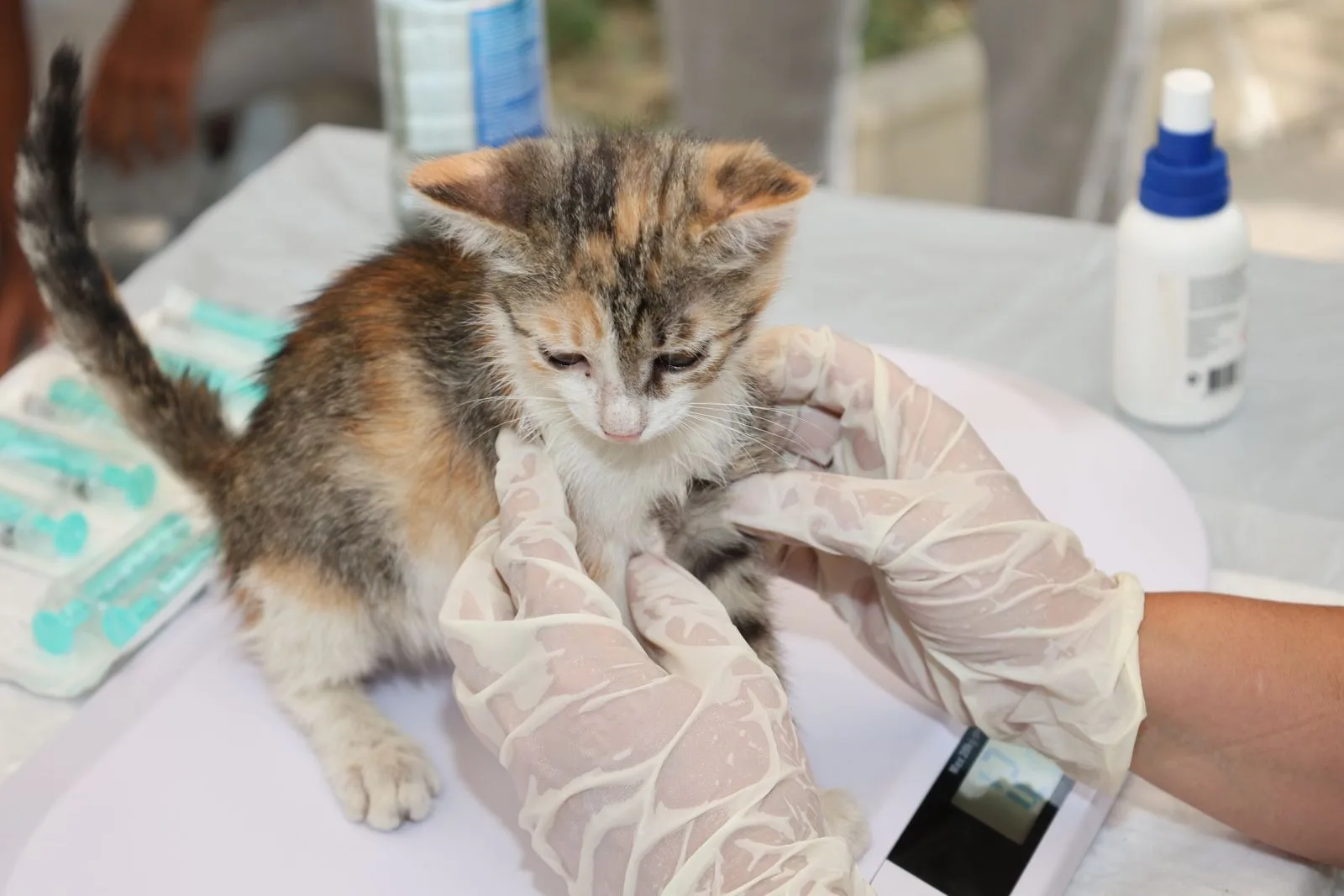
Pets who need to lose weight come back for a quick weigh-in every few weeks. If the number does not move, we adjust the plan instead of starting over.
Questions about nutrition and weight
Can I just feed less of the same food?
Sometimes, but cutting too much can leave your pet short of nutrients. Ask us before you cut the amount by more than a little.
Are table scraps okay as treats?
Small pieces of plain cooked meat or green beans are usually fine. Never give grapes, raisins, onions, garlic, chocolate, or anything sweetened with xylitol.
Reviewed by Dr. Corinne Danforth, DVM, October 7, 2026